Ahhhh, the “common privet” or as plant aficionado’s everywhere like to say LIGUSTRUM vulgare:
[LIGUSTRUM vulgare]

[photo: Washington State University]
Here’s another shot, possible the best one I’ve ever seen of the berries, actually the image above is the best one of a hedge I’ve ever seen. To tell the truth I am staring(fixated) on that image, and have lost my train of thought, that hedge actually looks decent, anyway . . .
 Even this pic looks good. I have added these courtesy of Washington State Univ. Because these are the best pics; heck, the only good pics I’ve ever seen of a Ligustrum. Here’s a page full.
To tell the truth this plant has given me the fits over the years I’ve been in this industry and have come across our big friend. I consider this some of the best top-drawer junk in all of the ornamental plant kingdom. Ornamental plant-that’s a good one.
To top it off if this scraggly, wacky, wild, ugly beast isn’t bad enough . . . there’s a gold one out there. Gold plants . . .
 Now we’re talking. LIGUSTRUM ovalifolium ‘Aureum’, the “Golden Privet”! This is the only decent picture in all of mankind, and I am still underwhelmed. The only thing that goes with Golden Privet is concrete(please notice lower right hand corner).
This beauty(like the above Ligustrum) is usually found is some sad, mis-shapen, wacky, over-grown hedge.
There’s a reason the stores and the nurseries sell privet for .99cents a piece.
____________________________________________________________
Addendum: The last pic is courtesy of the folks at Oregon State University, and was found here(big-time, reference). There is actually plenty more to learn about the privet bush if you go to Privet, and finally the USDA has some info on Ligustrum vulgare. This site can also be helpful for research.
____________________________________________________________
Addendum #2: In 1969, or ’70 my dad purchased some privet stock(probably 0.19cents apiece), to make a hedge along the back of the property. Now my dad grew up on a farm and had spent some time around plants, etc.(he knew how to use a shovel), but never the mighty privet. As common to most homeowners dad planted the hedge along the back property line, parts of the hedge were in full sun, parts in dappled sunlight, and down along the left side-almost full shade provided by the 70′ multi-stem Poplar tree.
Well some of us know what happened next. The privet in the full sun grew fast, strong, and mighty creating a almost fortress like wall. The middle grew lean, loooooong, and gangly. Finally the shaded privet grew barely at all, in just small little spurts. It was quite the mess.
My dad kept working with it until 1977 when cancer got the better of him and I continued the fight for awhile, but moving away and traveling left my mom defenseless-she had some help but was overwhelmed by the privet’s tenacity.
Last winter I drove by the old homestead to take a look at the house I grew up in. It was a mess . . . the Taxus that my parents had so meticulously taken care of were badly mis-shapen, the yard was a wreck, and the trees were no longer pruned/shaped-terrible.
However, the privet thrives and survives:
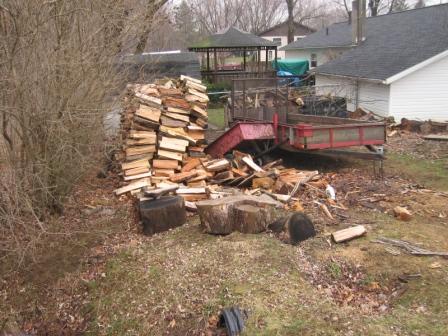 Looking at his mess I don’t know which is worse the 35year(+), 15.0′ high privet, or the lovely display in the neighbors backyard. **sigh**
So; yes . . . I do have a personal issue with Ligustrums-however . . . 0ver the past 30 years I have gone to battle with the mighty privet-the fun you have ripping out well-entrenched privet. Ahhhh the memories.
It’s junk pure and simple.
We are getting closer to the post on Shrubs we do not like. I hope you are getting your comments and list ready. I think this will be a bigger list than the tree list.


 The Whispering Crane Institute
Leave a reply to Golden privet | JakZodiac Cancel reply