
Wow, it’s been pouring like crazy for the last couple of days, totally soaking the ground and leaving the air all muggy. This afternoon, after that non-stop rain, one of my overgrown castor beans, which had been bravely standing strong through all the bad weather, just couldn’t take it anymore and toppled over, overwhelmed by its own leaves. It was such a bummer to see, especially since I had taken such good care of it and watched it grow big and beautiful, only to watch it give in to Mother Nature.

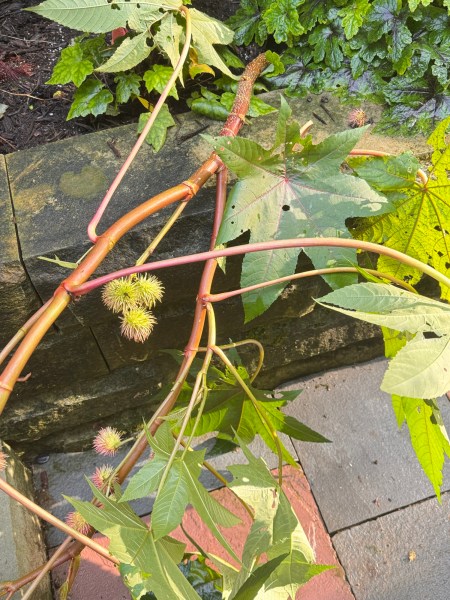







Ricinus communis, commonly known as the castor bean plant, is a perennial shrub native to Africa and the Middle East, known for its ornamental value and its seeds, which contain the toxic compound ricin.
Overview
- Family: Euphorbiaceae
- Height: Can grow up to 10 feet or more in favorable conditions.
- Leaves: Large, palmate leaves that can create a dramatic effect in gardens.
- Flowers: Small and clustered, followed by spiny capsules containing seeds.
Growing Conditions
- Prefers sunny locations that are ideally exposed to full sun for most of the day, and well-draining soil to ensure proper growth and prevent root rot.
- Thrives in warm climates and can be sensitive to frost, requiring protection during unexpected cold spells to ensure healthy growth and vitality.
- Requires regular watering, especially during hot periods, but needs to dry out between waterings to prevent overwatering.
- Benefits from occasional fertilization during the growing season to promote robust growth and blooming.
- May attract certain pests, so monitoring and timely action is necessary to protect the plant.
- Can be susceptible to certain diseases if conditions are too humid or wet, necessitating adequate air circulation.
- Prefers slightly acidic to neutral pH levels in soil for optimal nutrient uptake and growth.
Toxicity
The seeds are highly toxic and should be handled carefully because they contain ricin, a dangerous toxin that can cause serious health problems if eaten or mishandled. However, the oil extracted from castor beans, known as castor oil, is safe to use and has many medicinal uses that have been recognized for centuries. Castor oil has been valued in various cultures for its health benefits. It is a well-known laxative and is also used in skincare products for its moisturizing effects, helping to keep the skin hydrated and soft. Additionally, castor oil is frequently used in hair treatments to promote hair growth, reduce dandruff, and improve hair health by supplying essential nutrients. Its rich fatty acid content contributes to its popularity in natural remedies, supporting both external and internal health when used correctly. Whether added to massage oils or homemade beauty treatments, castor oil remains an important component in natural health practices today.
Applications
- Ornamental: Often used in landscaping for its impressive height and lush foliage, which enhances the visual appeal of gardens and parks, attracting attention and admiration from visitors.
- Industrial: Castor oil is widely used in various industries, including cosmetics for skin and hair care products, in lubricants for machinery to ensure smooth operation, and in pharmaceuticals as an effective ingredient for certain medications and treatments, highlighting its versatility and importance across multiple sectors.
Conclusion
Ricinus communis brings beauty and shows nature’s strength, especially after heavy rains that can weaken it and may require staking for support.


 The Whispering Crane Institute
This is the place to comment.